
Why Do I Crave Sugar and What My Body Is Asking For
Why do I crave sugar — three causes most diet content misses (protein deficit, the dopamine hit, the addictive qualities), plus the body-first way through without restriction.
It is mid-afternoon. The morning’s focus is gone, the lunch is wearing off, and the small flat feeling that tells you the day has gotten longer than your body wanted is sitting just behind your sternum. You walk past the kitchen on the way to the next task, or past the break room on the way back to your desk, and your eyes catch the chocolate on the counter. Or the cookie someone brought in. Or the sweet thing in the back of the cabinet (or the drawer at your workstation) you keep meaning to get rid of and keep not getting rid of. The intense desire arrives as a specific pull, not a general hunger. You want that thing. You want it now. By the time you have eaten it, the energy crash you were trying to quiet has not really lifted, and the small voice in the background says I did it again. This is why the question why do I crave sugar matters, and why the answer is rarely just because I have a sweet tooth.
You tell yourself you will be more disciplined tomorrow. You skip the morning carbohydrates. You eat the cleaner lunch. By the next afternoon you are back at the same chocolate, the same cookie, the same sweet treat, and the vicious cycle has run another round before you noticed it start.
I know that pull from inside it. In my early twenties, I had what I would now call a serious cake-frosting addiction. The way I knew it had become a problem was a specific moment. I was in a conversation, trying to listen to the person in front of me, and I could not. All my brain was thinking about was the cake frosting across the room. I loved frosting eaten straight off the cake or the cupcake or whatever was in arm’s reach. The intense desire was loud enough to drown out a person standing in front of me.
I was vegan at the time, and I think that mattered more than I knew then. I have come to find that people who are not eating enough protein, especially vegans and vegetarians, regularly tend to gain weight from eating more carbohydrates and more sugar, because the body is trying to meet its protein need with the only fuel it can find. Many years later, when I started eating meat again, a whole bunch of weight just fell off of me once I was finally getting enough protein. My body had been asking for something specific the whole time. It had been reaching for sugar because the protein was not there to ask for.
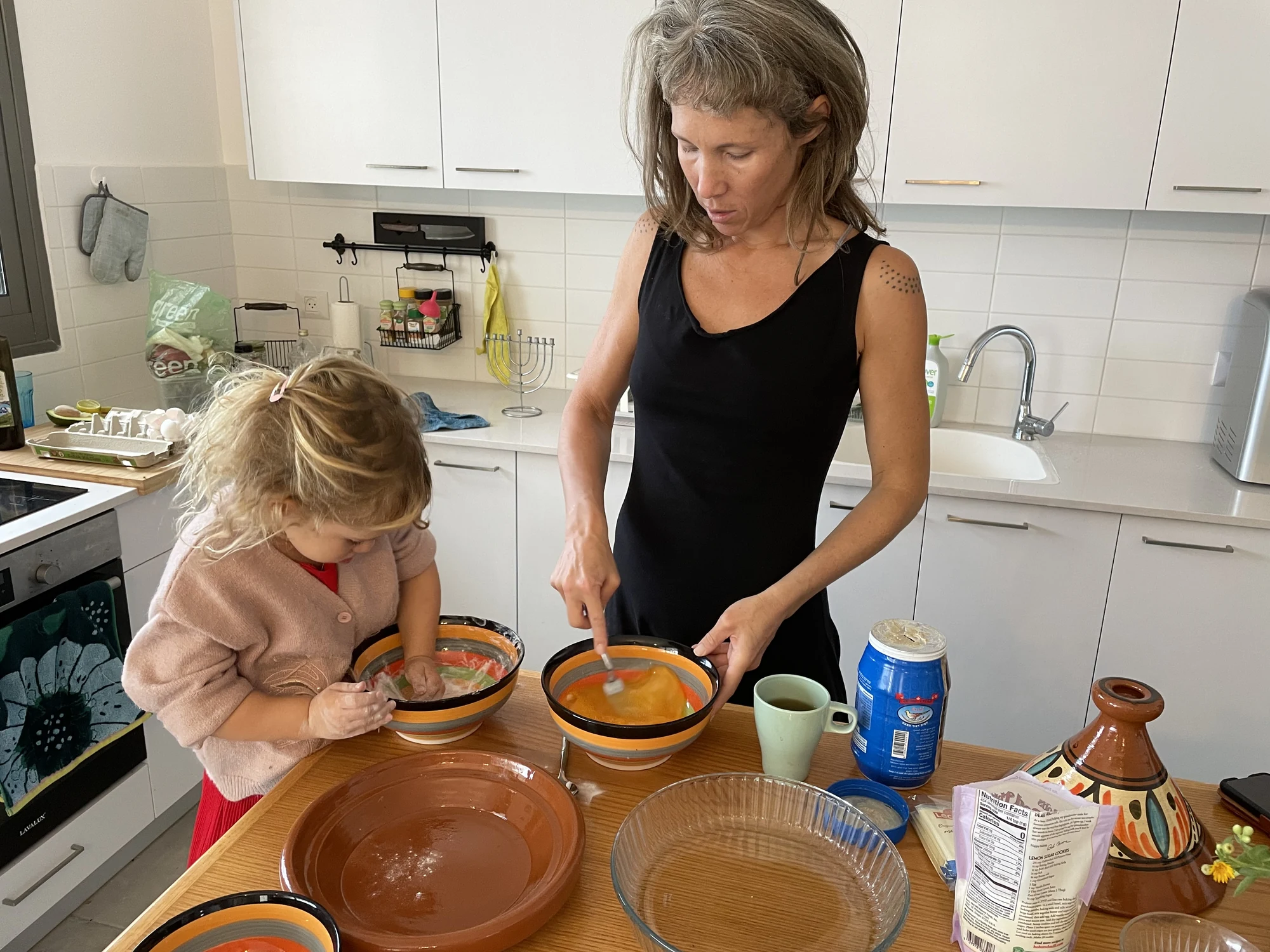
Recently I had a small breakthrough with the same story. My daughter’s class was having a birthday celebration, and I made the frosting for the carrot-cake cupcakes. I noticed I was actually a little scared to make frosting, because of what frosting had been for me twenty years ago. I made it with cream cheese and butter and date sugar, and as I was making it, I realized something. The frosting I had been addicted to in my twenties was probably highly processed, probably mostly vegetable oil, probably almost no real fat the body could use. My body had likely been starving for healthy fats. The sugar cravings had been a fat-deficit signal as much as anything else. The same body that had been desperate for frosting twenty years earlier did not flinch at all in the kitchen that night, because the body had what it needed. It was a quiet kind of healing moment with a tub of homemade cake frosting.
This is sugar craving. Not because you lack discipline. Because your body is asking for something specific underneath the sweet thing, and it has been asking for a long time. The first big step out of the loop is awareness: slowing down enough to read what your body is actually saying under the pull.
A dysregulated nervous system reaches for the fastest available source of comfort. The work to understand sweet cravings is rarely the work of trying harder by the candy bar. It is the work of slowing down enough to read what the body is actually asking for under the pull, and then meeting that need with what would actually settle it.
This post walks through what sugar cravings actually are, the three causes I see most often in the people I work with (and in my own arc), what highly processed sugar does to the body, the Ayurvedic herb I offer to people who are seriously struggling with sugar cravings, my reset philosophy (which is not what most people expect), the body-first somatic practice that makes the change reliable, and what to do when the pull is strong enough that the body-first work alone is not enough.
What Sugar Cravings Actually Are
Sugar cravings are the body’s signal that something it needs is missing, expressed as a specific reach for sweet foods. The signal is real. The fix is rarely just eat the sugar and rarely just don’t eat the sugar. The fix is to read what the signal is pointing at.
There is a piece of this most diet content misses. Sugar cravings are information. The intense desire for the sweet treat is the body trying to tell you something specific, in the only language it speaks fluently: cravings, energy crashes, mood swings, sleep disruption. When you can read the language, the cravings stop being a willpower battle and start being a conversation you can answer.
Three layers run together to make a sugar craving loud. First, the body has a real fuel need (often a protein or healthy fat need that is being misread as a sugar need). Second, the brain has a real dopamine need (sugar is the fastest dopamine the brain can find, faster than any other food, faster than most non-food sources). Third, sugar itself has addictive qualities (especially highly processed sugar that has been engineered to override the natural taste buds and hunger signals the body relies on). All three layers can be active in a single craving. The reach for the chocolate at 3pm is rarely about one thing.
You learned to soothe a body asking for something specific with the only thing that worked quickly. The pattern is not a flaw. It is a place to begin.
The Three Causes I See Most Often
In the work I do with my coaching clients, three root causes show up underneath most everyday sugar cravings. Naming which one (or which combination) is running you is the first step toward shifting the pattern.
Cause One: Not Enough Protein
When your body doesn’t have enough protein, it reaches for the next quickest fuel it can find. That fuel is regularly carbohydrates and especially sugar. Getting enough of all three macros — protein, fat, and complex carbohydrates — is what makes a meal satisfying. Protein specifically is what holds blood sugar levels steady between meals, and what builds and repairs the body. When protein is short, the body’s hunger hormone signals stay louder than they need to be, blood sugar swings wider, and the reach for sugar arrives earlier in the afternoon than it would otherwise.
This shows up most often in people eating low-protein or low-fat diets, vegans and vegetarians who have not figured out how to get enough plant-based protein at every meal, busy parents who skip lunch or eat a piece of toast and call it a meal, and women in perimenopause whose protein needs have gone up and whose intake has not changed. The fix is not always more food; it is often the same amount of food with more protein and healthy fat in it. Greek yogurt with nut butter and fresh fruits at breakfast. Protein-rich meals at lunch with whole foods, not just whole grains. An afternoon snack that includes protein and healthy fats, not just a sweet snack.
One specific pattern worth naming inside this cause: people who crave peanut butter in particular are regularly low in B vitamins. The peanut butter craving is the body reaching for the small amount of B vitamins peanuts carry, in the only language the body knows. A peanut butter craving is often more cleanly satisfied by a serving of high-quality regenerative meat, which carries B vitamins in their most bioavailable form alongside complete protein. If your peanut butter pull specifically is loud, that is one place to check.
Cause Two: The Emotional Dopamine Hit
Sugar is the fastest brain chemical reward you can buy at the grocery store. Faster than fruit. Faster than complex carbohydrates. Faster than anything fatty foods alone can deliver. When you are stressed, depleted, lonely, bored, or holding emotions you did not have time to feel, the brain reaches for the quickest available dopamine, and sugar wins. The reward system was not built for the modern food environment. It was built for a world where sweet foods were rare and energy-dense calories were a survival advantage. Now sweet foods are everywhere, and the same wiring that kept us alive a hundred thousand years ago is what makes the candy bar at the gas station feel like the most important thing in the room when the day has gone hard.
This is the layer where psychological stress, lack of sleep, and high cortisol levels meet sugar cravings. A poor night’s sleep regularly produces louder sweet cravings the next afternoon. A stressful week regularly produces louder sweet cravings on Friday afternoon. The brain is not failing you. It is doing exactly what evolution shaped it to do, in a food environment evolution has yet to catch up to.
Cause Three: The Addictive Qualities of Sugar
This is the layer most people underestimate. Highly processed sugars (especially the kind in candy bars, sugary drinks, sugary snacks, salad dressings, and most packaged foods) hit the brain reward system harder than the natural sugar in fruit. Food manufacturers have spent decades engineering sweet stuff to be more palatable than nature ever made it. The taste buds get conditioned to higher and higher sweetness. The brain learns the pathway. Each sweet experience cements it a little deeper.
Some of the people I work with describe a pull they are slightly afraid of, the kind that feels less like a craving and more like a compulsion. The NIH and the American Heart Association have both published on the addictive qualities of added sugar; this is not a fringe claim. The brain is also plastic. The same wiring that learned the pathway can learn a new one, when the conditions underneath the reach (protein, stress, sleep, the emotional layer) are met.
What Highly Processed Sugar Does to the Body
In my coaching, I do a lot of teaching about what sugar (especially highly processed sugar) actually does to the body. The teaching is what motivates the change for most people, more than any rule could.
It holds weight on the body that wants to release it. Highly processed sugar drives blood sugar spikes that the body answers with bigger insulin responses, and chronically elevated insulin promotes fat storage, especially around the middle. This is one of the layers underneath insulin resistance and the metabolic patterns that show up in the people I work with. Living at your ideal weight feels good. The body that has come back to balance regularly moves toward that weight on its own, without anyone counting calories.
It causes brain fog. Glucose spikes followed by glucose crashes (especially after sugary drinks or sugary energy drinks) leave the brain running on uneven fuel. Concentration, memory, mood, and energy all take a hit. The 3pm crash that sends you back for more sugar is regularly the body trying to recover from the sugar it had at lunch.
It drives inflammation. Excess sugar contributes to oxidative stress and chronic low-grade inflammation throughout the human body. Inflammation shows up as joint stiffness, skin flares, digestive issues, headaches, mood disruption, and the general feeling of not quite right that many people get used to. The deeper post on silent inflammation covers the inflammation layer in more depth.
There is also a downstream layer most people miss. Chronically elevated blood glucose levels and insulin resistance over years feed forward into cardiovascular disease, type 2 diabetes, and a meaningful share of the chronic conditions our healthcare system is currently overwhelmed by. The American Heart Association recommendation on added sugar (no more than about 25 grams a day for women, 36 for men) is not arbitrary. It is roughly what the research suggests the human body can handle without significant impact.
None of this is meant to make you afraid of sugar. It is meant to give you the information that lets you choose differently when you want to.
The Gymnema Layer (An Ayurvedic Helper)
For clients whose sugar cravings are loud and stubborn, I suggest using Gymnema sylvestre, an Ayurvedic herb that has been used in traditional medicine for centuries to support blood sugar balance and reduce sugar cravings. Its Sanskrit name gurmar means sugar destroyer. The primary mechanism is that gymnemic acid binds to the sweet receptors on the tongue, temporarily blunting the ability to register sweetness. A small dose before a meal makes sweet stuff taste less sweet, which over time can lessen the cravings themselves by making the brain’s reward circuitry less responsive to sugar.
Gymnema is not a magic bullet. It does not work for everyone. It is a support during the reset, not a substitute for the underlying work of meeting the body’s protein, fat, sleep, and emotional needs. I use it with clients as one tool among several, and only with clients whose providers have signed off on adding an herb (gymnema can interact with diabetes medications and is not appropriate for pregnant or breastfeeding clients without clinician supervision).
If gymnema is not the right tool, other supports that can help with everyday sugar cravings include adequate sleep, protein-rich meals, b vitamins, smaller meals more frequently to keep blood sugar levels even, and keeping a continuous glucose monitor for a few weeks if your healthcare provider supports it (a CGM is one of the fastest ways to see how specific foods land in your own body). The right combination is the one that meets your specific picture.
How My 30-Day Food Reset Actually Works
This is the part of the work that surprises most people. I do not tell my clients to give up sugar in the 30-day food reset.
I offer my clients to choose which foods they want to shift. The reset is choice-based, not abstinence-based. What I do is teach what sugar (especially highly processed sugar) does to the body, the way I have walked through above. The food re-education is the layer that motivates the change. When clients can read what the sugar is doing inside their body, the relationship changes on its own. Many of them choose to take a 30-day break from highly processed sugar after the food re-education has landed, because they want to see what they feel like without it.
The framing matters. I am giving up sugar sets up a deprivation pattern that the brain reads as scarcity, which makes the reach louder once the reset ends. I am taking a 30-day break to see what my body feels like with less highly processed sugar in it sets up a curiosity pattern that the brain reads as agency. The second framing holds. The first one rebounds. This is part of why diets don’t work, covered in more depth in the deeper post on why diets don’t work.
What does shift on its own during a reset, for most clients: dark chocolate (which has less sugar and more cacao than milk chocolate) starts to taste sweet enough. Fresh fruits start to register as a real sweet treat instead of a poor substitute. Dried fruit becomes a dessert. Greek yogurt with a little honey becomes satisfying. The taste buds recalibrate. The brain learns that real food, eaten in enough variety, is itself a satisfying experience, not a punishment.
The Body Check Practice for Sugar Cravings
The body check (also called the somatic protocol) is the practice the rest of the work rests on. The full version (hand on heart, hand on belly, three slow breaths, three questions, plus the question that creates the pause) lives in the deeper post on emotional eating vs physical hunger. For sugar cravings specifically, the body check has one extra question worth adding.
When you notice a sugar craving rising, pause for thirty seconds before the food. Hand on heart, hand on belly, three slow breaths. Then ask the three questions: where in the body, how it arrived, what it wants. Then add the sugar-specific question:
Have I had enough protein and healthy fat today?
If the answer is no, the craving is regularly a fuel-need craving showing up as a sugar pull. The fix is a real meal or a snack with protein and fat (a handful of nuts and an apple, nut butter on whole grains, greek yogurt with berries, leftovers with fat and protein in them) before you decide whether you want the sugar.
Then ask the future-self question:
How do I want to feel in two hours?
This is the question that creates the pause. The sugar that feels good in the moment is regularly the sugar that creates the energy crash in two hours. Your stomach knows. Your energy knows. Your mood knows. Once you start asking that question honestly, the choice often makes itself.
A few lines that help in real time when the sugar pull is loud:
Body first. Sugar second.
How much protein have I had today?
A glass of water and ten minutes before I decide.
These are not affirmations. They are short sentences that buy the nervous system the few seconds it needs to come back online and the prefrontal cortex the few seconds it needs to make a real choice rather than a reflex.
When You Stop Reaching for Sugar, What Comes Up
There is a piece of this work I want to name directly. When you start watching your sugar cravings instead of overriding with sugar, the feelings underneath start to surface. The sweet stuff was a way of not feeling them. As soon as the sugar eases up, the feelings have somewhere to go. They go up, into your awareness.
This is regularly when chronic emotional eaters arrive in coaching. The food got quieter. The waves got louder. They had been eating over years of grief, anger, anxiety, loneliness, boredom, the pile of difficult emotions nobody had time to feel through. The cycle of emotional eating that had been running for years started to break, not because they tried harder at the chocolate, but because the feelings underneath finally had a place to land.
This is the actual work. The cluster on emotional awareness — how to feel your emotions goes further on what to do when those feelings rise. The deeper post on uncomfortability is the body-side companion, the practice of staying with the wave for the thirty to ninety seconds it needs to move through.
If the reach for sugar happens most often in the evenings, the deeper post on how to stop snacking at night covers the evening protocol. If the reach happens when stress is high (a hard meeting, a kid melting down, a day that asked too much), the deeper post on why you eat when stressed covers the cortisol layer. If the sugar pull is loudest when anxiety is running, the deeper post on how to stop anxiety eating covers the activation-state pattern.
This is the spine of Mood Before Food, the methodology I have built. Address the mood, and the food fight eases. Address the nervous system, and the cravings become less intense. Then experiment with food changes and feel the difference. That is when the food changes really click. The order matters. Most diet plans put the food first and skip the mood. The body-first inversion is what makes the practice hold, especially with sugar, where the dopamine loop is wired so deep.
When to Bring in Professional Support
The body check, the conscious-choice practice, reading which of the three causes is loudest in the moment, and the body-first reset do much of the work most of the time. Some patterns need more.
If sugar cravings have tipped into binge episodes that feel out of your control, if there is a pattern of restriction-and-rebound running for years, if poor gut health is making the cravings worse, if your blood glucose levels or insulin patterns are concerning your healthcare provider, if there is a family history of cardiovascular disease or type 2 diabetes, if your mental health and your relationship with food have been struggling alongside each other for a long time, please bring a clinician in. Useful pathways: a registered dietitian who is body-first and weight-neutral, a healthcare provider who can run labs (continuous glucose monitor, fasting insulin, hemoglobin A1c, vitamin and mineral panels for nutritional deficiencies), an Ayurvedic practitioner who can advise on gymnema and other herbal supports, a therapist who works with disordered eating, a somatic therapist who knows how to track activation in the body, eye movement desensitization and reprocessing for the moments that imprinted in your own childhood, psychedelic-assisted therapy with a guide trained in integration when the patterns reach into territory the body-first practice on its own cannot fully open, or another modality your provider trusts. None of these is a replacement for the others. What works often combines several. Body-first regulation work is regularly the layer that makes the rest land.
For the Kids and the Sweet Things You Are Modeling
The relationship you are building with sugar right now is the one your kids are learning about sugar.
If they watch a parent reach for the candy bar in the same flat moment, day after day, they are downloading that pattern. Years from now, in a hard moment of their own, the body that watched yours will reach for the same thing. The same chocolate, the same cookie, the same pint of ice cream after the hard day. The same secret stash in the back of the cabinet. The same shame layered on top.
A child who watches a parent pause, ask whether the body has had enough protein today, drink the glass of water, take three breaths, and then choose (sometimes the chocolate, consciously and without shame; sometimes the apple with nut butter; sometimes nothing at all, because the body did not actually want the sugar) is downloading something else entirely. They are learning that sugar is one ingredient in a varied diet, not a forbidden food and not a free food. They are learning that the body can be read, that cravings carry information, and that the adult in front of them is in honest conversation with their own body. Naming the practice out loud is the practice. Saying I am going to check whether my body actually wants the sugar in front of your kid does more than any rule about sugar ever did.
This is why I do this work. Yes, partly so you can stop fighting sugar cravings in your own body. And just as much, so the pull-and-shame cycle with sugar stops in you instead of becoming theirs, and your kids grow up watching a parent who is teaching themself a new conversation with their body. Live what you want them to absorb about food.
“The first big step is awareness.” — Zen Odyssey: The Adventure of Awareness
Frequently Asked Questions
Why do I crave sugar even when I am not hungry?
Three layers usually run together. Your body may be short on protein or healthy fats and is reaching for the next quickest fuel. Your brain may be short on dopamine and is reaching for the fastest available reward. And the sugar itself may have built an addictive pathway that fires whenever the trigger arrives. The body check, plus the protein-and-fat question, will tell you which layer is loudest in your specific moment.
Is sugar addiction real?
Yes, in functional terms. Highly processed sugar lights up the brain’s reward circuitry in ways similar to other addictive substances, and the NIH and the American Heart Association have both published on the topic. That said, sugar is not chemically equivalent to alcohol or opioids. The brain’s response to sugar is real and worth respecting; framing it as a sugar addiction in the same way as a substance-use disorder may overstate the case. Most everyday sugar cravings respond well to body-first work without clinical intervention. A small minority of patterns benefit from professional support.
What can I eat instead of sugar when the craving hits?
The first move is not to substitute, but to read. Hand on heart, three breaths, the body check, the protein-and-fat question. If the body is genuinely hungry and short on protein, eat a real snack with protein and fat (greek yogurt with berries, nut butter on whole grains, leftovers, hard-boiled eggs, nuts and an apple). If the body has had enough protein and the craving is dopamine-driven, a hot cup of herbal tea with a small piece of dark chocolate often satisfies the craving without driving the next blood sugar spike. If the craving is emotional, the work is to address the emotion underneath, not to find a smarter food to substitute.
Why do I crave sugar more during my period or in perimenopause?
Hormonal shifts (especially drops in estrogen and progesterone in the days before your period, and the longer hormonal swings of perimenopause) affect blood sugar regulation, mood, sleep, and the brain’s dopamine response. Sugar cravings during these phases are a real physiological response, not a willpower failure. The fix is the same body-first protocol with extra attention to protein, sleep, and the emotional layer in those windows. The deeper post on hormones and weight gain covers the hormonal piece in more depth.
Where should I start?
Start with the protein-and-fat question for one week. Make sure every meal has enough protein and healthy fat. Notice what happens to your sugar cravings. Then add the body check (hand on heart, three breaths, the three questions, the protein question, the question that creates the pause). Practice it without changing what you eat. The food choices change after the reading is honest, not before. The deeper Mood Before Food methodology lives in the food psychology pillar, and the fuller body-wisdom layer lives in Chapter 0 of the Handbook for Human Potential.