
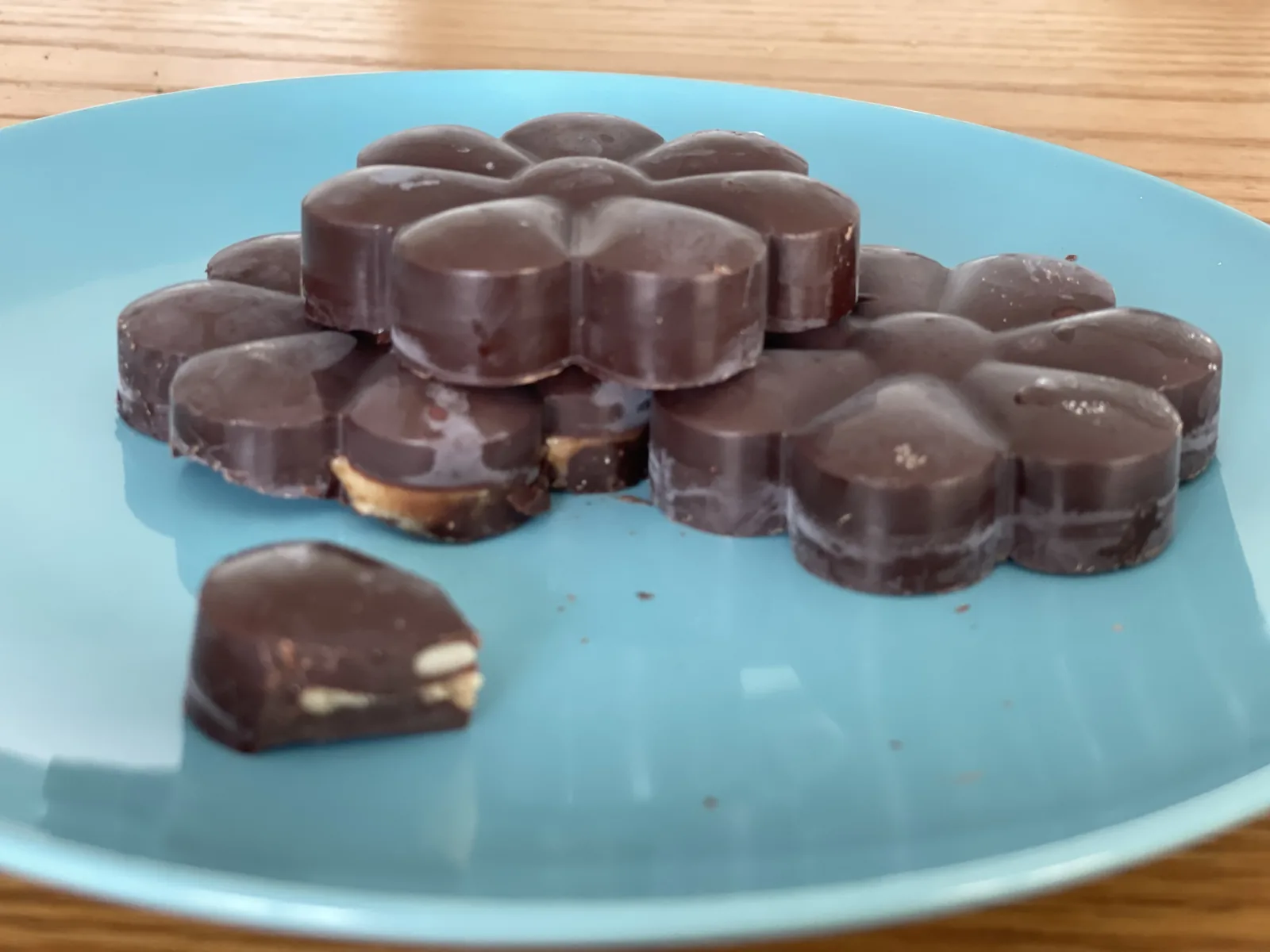
I get asked often what my thoughts on chocolate are from a health perspective. A few days ago, my partner and I had a small tiff about rationing our little one’s chocolate. After the dust settled, he came back and asked me, away from her: what are the actual downsides of eating chocolate? That question opened up a really good conversation.
The short version is this: chocolate in its best form is medicine. It only becomes a problem when it stops being chocolate.
As long as the chocolate is high quality and there is no added junk, it’s a medicinal treat to enjoy without guilt.
When chocolate is medicine — and when it isn’t
The health cost of chocolate comes from what gets added to it, not from cacao itself. The cheaper the bar, the more of these things show up:
- Processed sugars (refined cane sugar, dextrose, corn syrup derivatives)
- Industrial seed oils and stabilizers (PGPR, soy lecithin in non-organic forms)
- Synthetic flavorings and the artificial vanillin used to mask poor-quality cacao
- Factory-processed cocoa that’s been alkalized (Dutched) or roasted hot enough to destroy the polyphenols that make real chocolate medicinal
When you strip those things out and you’re left with pure cacao, fat, and a little honey — what remains is genuinely good for you.
Just after the conversation with my partner, an email landed from ZOE Science & Nutrition — a science-based health company I follow — about exactly this topic. One thing I learned from their episode: artisan chocolate, made by smaller producers without industrial Dutching or heavy refining, is genuinely beneficial to the gut microbiome. Real cacao is rich in polyphenols that feed beneficial gut bacteria. Factory chocolate strips most of that away.
The implication is straightforward. If you’re going to eat chocolate, eat the real one. Or — better — make it yourself, so you know exactly what’s in it.
We make this with our little one
For the last few months, my daughter and I have been making this chocolate together — and it’s become one of my favorite kitchen rituals with her. She watches the cocoa mass melt and turn shiny. She helps drizzle the first layer into the silicone mold. She picks where the salt goes on top.
There’s something specific that happens when a child grows up making real chocolate with their hands. They learn that chocolate doesn’t come from a wrapper — it comes from cacao, cocoa butter, a little honey, and time. They learn the difference between medicine in a bar and the highly-processed version by tasting them. And they get to associate the joy of chocolate with the kitchen, with us, with care.
This is also the version we ration with confidence. It’s chocolate I’m happy to hand her, and that I’m happy to eat myself.
What’s in this version
A few notes on the ingredients (full list and amounts in the recipe card below):
- Cocoa mass (also called cacao paste or 100% cacao) is the unsweetened, unprocessed form of chocolate — pure ground cacao beans with all the cacao butter intact. This is the structural backbone of real chocolate. We use Santa Barbara Chocolate’s organic 100% cacao chips — Criollo varietal, single-origin, ethically sourced.
- Raw cocoa butter is what gives chocolate its silk and snap. Most commercial bars use less than they should. Use non-deodorized raw cocoa butter — the deodorized kind has been chemically stripped and is missing the natural antioxidants.
- Raw honey is the only sweetener. Just enough to round the bitterness of real cacao. If you want it less dark, add more nut butter — cashew butter or more tahini — rather than more honey (see variation below).
- Tahini in the filling adds a deep, slightly bitter warmth that balances the honey. You can swap in almond butter or another smooth nut butter if tahini isn’t your thing.
- Cocoa nibs in the filling give crunch and an extra dose of polyphenols.
- Pine nuts or pecans in the bottom of the mold add toasty richness on first bite.
- Coarse Himalayan salt on top makes everything taste more chocolatey. Don’t skip the salt.
Less dark? Mix the tahini in
If the recipe as written is too dark for your taste, here’s the variation: instead of using the tahini-honey mix as a layered filling, stir it directly into the melted chocolate before pouring. Increase the tahini to 4 or 5 tablespoons. You’ll get a softer, smoother, less intensely dark chocolate. Same ingredients, gentler flavor profile.
Pro tips
- No water near the chocolate. Even a single drop of water in the melted cocoa butter can cause the chocolate to seize and turn gritty. Make sure your glass bowl, spoon, and mold are completely dry before starting.
- Don’t overheat. Medium-low heat is plenty. Real chocolate seizes above about 130°F. If you have a thermometer, stay below 120°F.
- Silicone molds work better than metal. The chocolate pops out cleanly without tempering. Heart shapes, bar shapes, mini-rounds — whatever you have.
- Double the recipe — but no more than double. I genuinely cannot remember a single time I made this and wished I’d made less. Beyond doubling, the cacao, cocoa butter, and honey start to separate, so double is the max.
Ways to eat it
- As a post-dinner treat — one or two pieces, slowly, with hot tea (especially the cashew milk maté latte made non-caffeinated with rooibos or tulsi rose)
- As an after-school snack for my daughter — high-protein from the tahini and pine nuts, low-glycemic from the cacao + honey ratio
- As an energy bite before a hike or workout — surprisingly good pre-effort fuel
- As a small gift in a wax-paper-lined tin for friends and family
Best-overs
Homemade chocolate is best kept in an airtight container in the fridge. It will hold for about 2 weeks at refrigerator temperature, or up to 2 months in the freezer. Don’t leave it at room temperature, especially in warm weather — without industrial tempering, real cocoa butter softens fast.
Recipe
Gut-Friendly Homemade Chocolate
Prep: 15 min · Cook: 40 min (two 20-min freezer cycles) · Total: 55 min · Yield: about 12 chocolates (I always double this)
Ingredients
- 100 grams (3.5 oz) cocoa mass (cacao paste / 100% cacao chips)
- 50 grams (less than 2 oz) raw cocoa butter wafers
- 2 tablespoons raw honey
- 3 tablespoons tahini (or other nut butter, e.g., almond butter)
- 1 teaspoon coarse Himalayan salt (or to taste)
- 2 tablespoons cocoa nibs
- 3 tablespoons pine nuts or pecans, roughly chopped
Instructions
- Make the filling: mix the tahini, cocoa nibs, and honey together in a small bowl. Set aside.
- Set up a double boiler: place a glass bowl over a pot with about an inch of water on medium heat. The bowl should not touch the water.
- Melt the cocoa mass and cocoa butter together in the glass bowl, stirring continuously, until fully melted and smooth. (Don’t let any water near the chocolate — even a drop can make it seize and turn gritty.)
- Place the chopped pine nuts or pecans in the bottom of a silicone chocolate mold.
- Spoon HALF of the melted chocolate into the mold, covering the nuts. Tap the mold gently on the counter to settle.
- Place in the freezer for 20 minutes, until the first chocolate layer is solid.
- Remove from the freezer. Spoon the tahini-honey filling into the center of each mold cavity — about a teaspoon per cavity, depending on mold size.
- Pour the remaining melted chocolate over the filling to cover. Tap the mold gently again to settle.
- Sprinkle Himalayan salt over the top.
- Place back in the freezer for another 20 minutes.
- Pop the chocolates out of the silicone mold and savor — or store in an airtight container in the fridge for up to 2 weeks.
A final note
If chocolate has been on your “things I shouldn’t eat” list, this is the version that puts it back on your “things that nourish me” list. Real cacao, real cocoa butter, real honey, real salt. Five minutes of melting and forty minutes of freezer time, half of which can be hands-off while you’re doing something else.
Make it once. Hand a piece to whoever is in your kitchen. Watch their face. That’s the whole point.
Until next time, have a beautiful day.
— Chandra Zas