
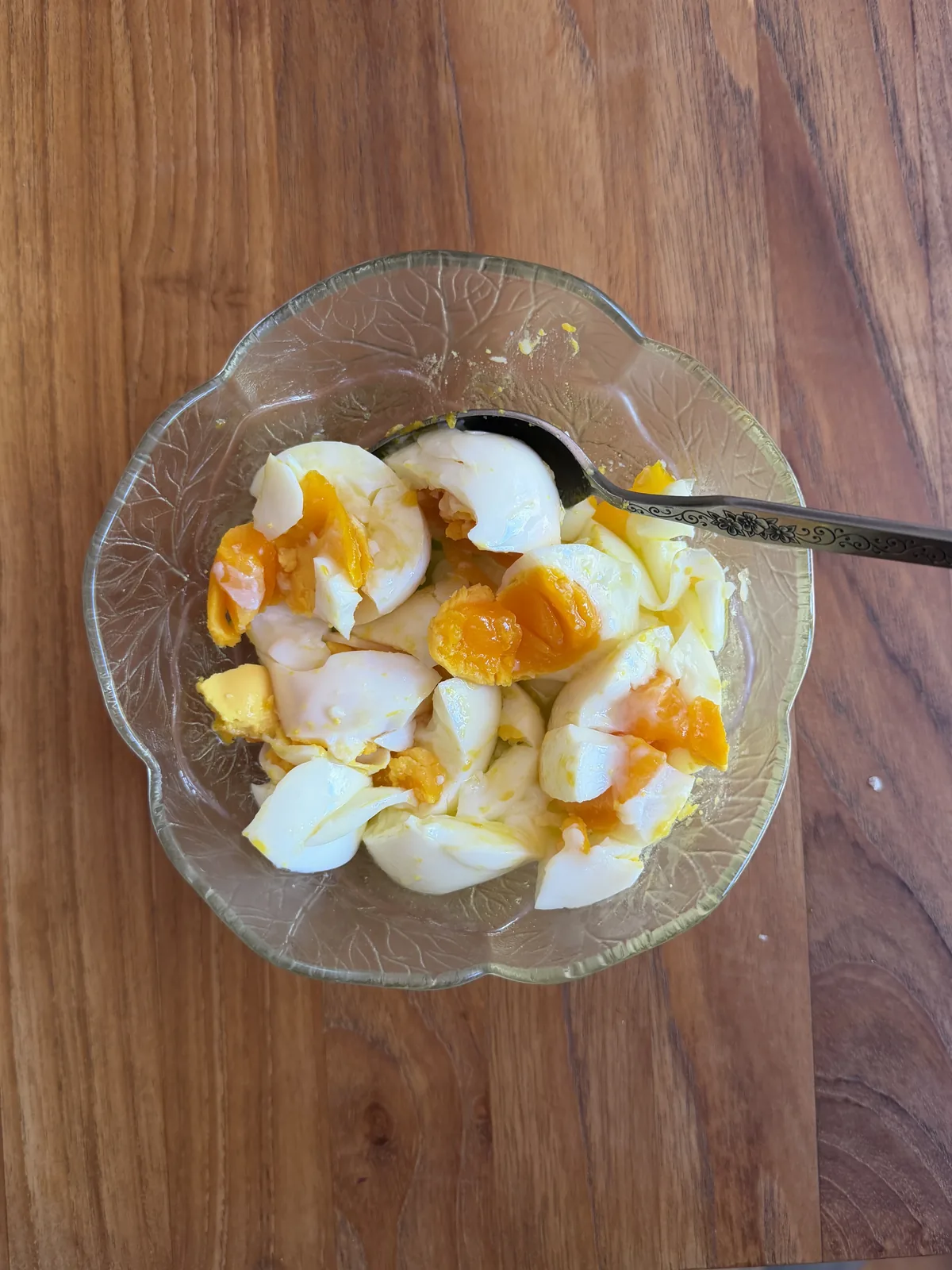
In our house, we call this Egg Soup. My favorite way of breaking fast is exactly this: two or three (or four) soft-boiled eggs in a bowl, a generous pour of good olive oil, a pinch of mineral-rich salt, and a spoon. It takes about ten minutes start to finish and it leaves me clear-headed for hours.
I think of this as the best breakfast I can eat when I need my brain to actually work — the protein, the egg-yolk fats, and the olive oil together feed focus in a way that toast and coffee never have for me. As long as the eggs aren’t overcooked, they’re easy on the gut, and the whole bowl lands gently. (Overcook the eggs and you’ll know — smelly burps, every time. The cook is the whole game.)
It’s also a breakfast my little one and I have shared many times. Same bowl, smaller spoon. Soft-boiled eggs are one of the most nutrient-dense foods you can put in front of a developing brain — and they’re equally good for an adult trying to keep theirs clear.
Why this works
A soft-boiled egg in good olive oil is a small, complete piece of food:
- The yolk fats feed the brain. Egg yolk is one of the richest dietary sources of phospholipids and omega-3s — the building blocks the brain actually uses. The yolk runs and binds with the olive oil into something almost custardy.
- The protein is gentle and complete. Eggs are one of the most easily-digestible whole-protein foods, as long as they’re not overcooked. A soft-set white and a soft yolk are kind to the gut.
- Olive oil is the right fat to pair. A real, single-origin extra virgin olive oil adds monounsaturated fat, polyphenols, and the kind of warmth-on-warmth Mediterranean flavor that turns three ingredients into a meal. It’s also a digestive aid — the oleic acid stimulates bile production, which helps your body break down and absorb the other fats in the meal.
- Salt closes the loop. A mineral-rich salt (sea, mountain, or river — not iodized table salt) finishes the flavor and adds the trace minerals most people are mildly low on. Julie North’s chapter in The Handbook for Human Potential lays out how an estimated 80% of people are short on trace minerals and cell salts. Get the Handbook and read her chapter to learn more.
That’s the whole nutritional case. Four ingredients, ten minutes, and a brain that works.
Egg quality matters more than anything else
The life the chicken lived shows up in the egg. The yolk color used to be the simple tell — pale yellow meant grain-fed indoor birds; deep golden-orange meant pasture-raised chickens that scratched around eating bugs and greens. Today it’s more complicated. Many producers have learned that supplementing chicken feed with turmeric, marigold extract, paprika, or dried carrot can boost yolk color without necessarily improving what’s inside the egg. An orange yolk is still encouraging. It’s just no longer a guarantee on its own.
What actually matters is the chicken’s diet, environment, and how the eggs are tested. A few things to look for:
- Direct from a regenerative farm is the top tier if you can swing it. We currently get our eggs shipped from Angel Acres Farms — regeneratively farmed, exceptionally well-treated chickens, the most-tested eggs we’ve found, and notably low in polyunsaturated fats (which matters more than most egg conversations acknowledge — low-PUFA yolks are better fat fuel for the brain and gentler on the body over time). After years of researching egg sourcing, this is where we landed.
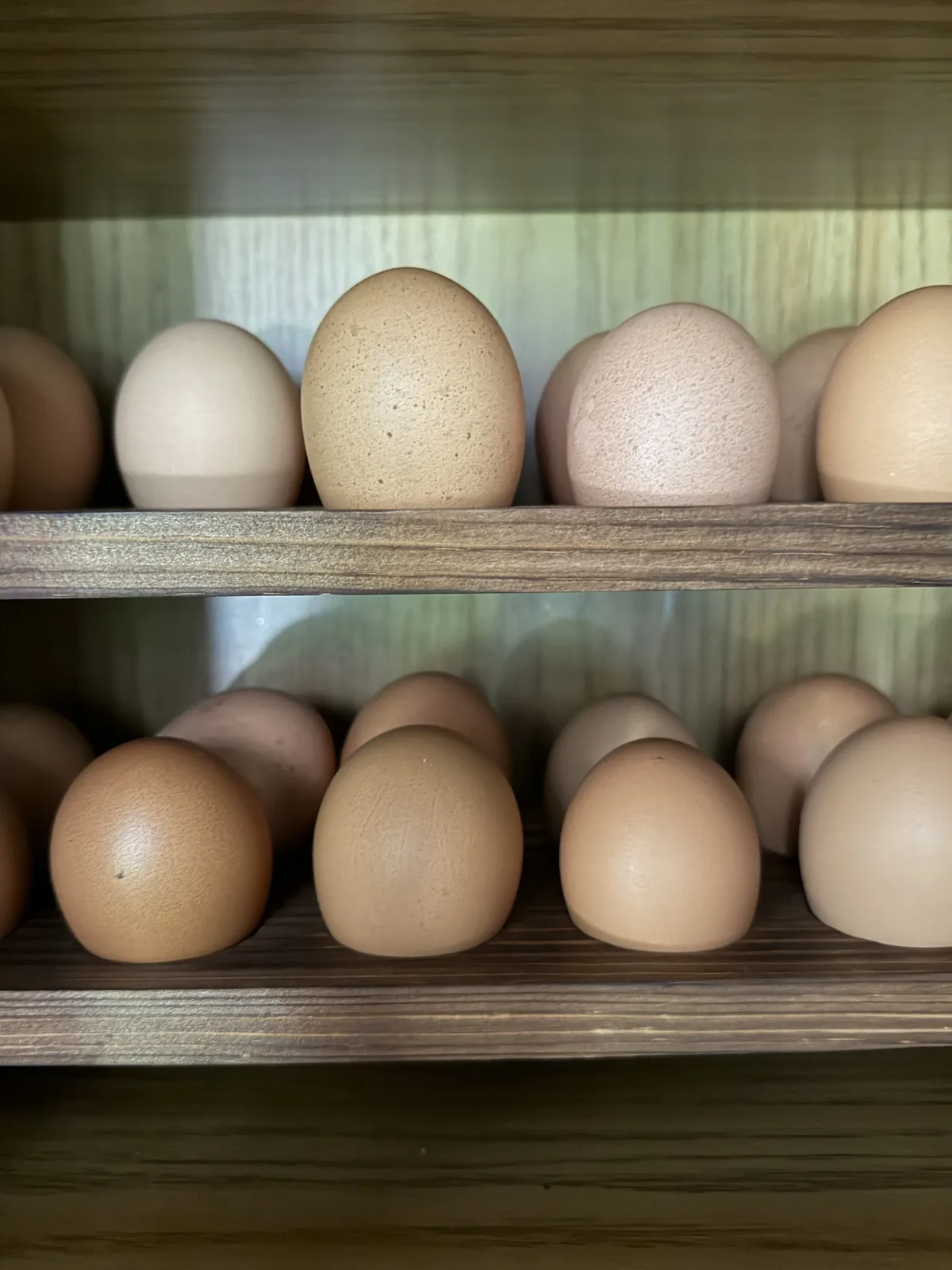
- Organic + free-range + pasture-raised is the trifecta to look for on any grocery carton. The combination matters more than any single label.
- Local farmers’ eggs if you have access. Even better: ask the farmer what their chickens actually eat. The yolks of fresh local eggs are often the deepest you’ll see.
- Do the diet homework before you buy. What chickens eat shows up in their eggs. Grain-heavy diets (especially corn and soy) produce eggs higher in polyunsaturated fats — and grocery-store cartons rarely tell you what they’re feeding. The brands worth your dollar are transparent about feed, third-party tested for purity, and don’t hide behind vague terms like “cage-free” (a much lower bar than pasture-raised).
Spend the extra dollar.
The soft-boil method that holds up across kitchens
I’ve made these in a lot of different kitchens over the years, and one thing I’ve learned is that the perfect time changes. The size of your eggs matters, the altitude matters, the stove matters, and how many eggs you’re cooking at once matters. So instead of one rigid number, here’s the range:
- Small eggs, 1–2 at a time: 5 minutes.
- Standard large eggs, 2–4 at a time: 6–7 minutes (this is my number).
- Extra-large eggs, 4+ at a time: 7–8 minutes.
The method:
- Bring a small pot of water to a rolling boil.
- Lower the eggs gently into the boiling water with a spoon so they don’t crack.
- Set a timer for 5–8 minutes based on the range above. Err on the lower end — a slightly under-set white can still be eaten; a hard-boiled overcooked egg cannot un-cook itself.
- When the timer rings, take the pot to the sink and briefly run cold water over the eggs — just long enough to stop the cook and make them easier to handle. I peel mine while they’re still kinda hot because I like eating them hot. (If you’re saving them for later, use an ice bath for a few minutes instead — it stops the cook completely and they’ll keep better in the fridge.)
- Peel and place in a small bowl. Drizzle with olive oil. Sprinkle with salt. Eat hot.
Once you find your number on your stove, it becomes muscle memory.
A note on the fat: olive oil first
The default — and the version that holds the dairy-free claim — is good olive oil. A grassy, peppery extra-virgin pairs beautifully with a soft yolk and adds another dimension of fat-soluble nutrition.
If you want to swap, ghee or grass-fed butter are both excellent alternatives. (Both add dairy back into the equation, so the dairy-free tag stops applying when you use them.) Each has its own moment — olive oil for a Mediterranean breakfast feel, ghee for something warmer and more savory, butter when you want pure comfort.
On the butter specifically: insist on grass-fed. What the cow eats shows up in the fat. Grass-fed butter has significantly more omega-3 fatty acids, CLA, vitamin K2, and beta-carotene than butter from grain-fed cows. Grain-fed butter is missing most of what makes butter worth eating. Straus organic grass-fed butter or a local organic grass-fed creamery are the picks we trust.
The sick-day variant: add raw garlic
When someone in our house is fighting something off — a cold coming on, a sore throat, the start of a flu — I add one small clove of raw garlic, finely minced or grated, right on top after peeling. The hot egg gently warms the garlic just enough to soften the sharpness, while keeping the antimicrobial compounds intact.
A few sick-day moves to know:
- Grate the garlic on a microplane if you have one — finer than mincing, easier to swallow without crunch.
- Add it after the eggs are in the bowl, never to the boiling water. Cooking garlic kills most of what makes raw garlic medicinal in this context.
- Eat it as hot as you can. Heat helps with congestion and warms the whole digestive tract.
- Skip the garlic on a settled stomach. Raw garlic is strong; if your gut is already irritated, the olive-oil-and-salt version is gentler.
This is the version I reach for the moment I feel something coming on. Three ingredients become five minutes of real medicine.
Make it a full meal
When I want this same egg-and-olive-oil pairing but as a real lunch, I scale it up into a bowl with greens, kraut, seeds, and avocado. That’s my soft-boiled egg salad — same eggs, same olive oil, but built into a full meal that holds you through an afternoon.
The Egg Soup version is for mornings, sick days, or any time I want the pure essence of the dish without the chew of a full salad.
Recipe
Egg Soup — Soft-Boiled Eggs with Olive Oil & Salt
Prep: 3 min · Cook: 7 min · Total: 10 min · Yield: 2 eggs (1 serving)
Ingredients
- 2 to 4 organic free-range eggs (we ship ours from Angel Acres Farms)
- 1 to 3 tablespoons good olive oil
- Sea, mountain, or river salt to taste
- Optional alternative fat: ghee or grass-fed organic butter
- Optional sick-day variant: 1 small clove garlic, finely minced or grated
Instructions
- Bring a small pot of water to a rolling boil.
- Gently lower the eggs into the boiling water with a spoon (so the shells don’t crack).
- Set a timer based on egg size and how many you’re cooking: 5 minutes for small eggs or 1–2 at a time, 6–7 minutes for standard large eggs, 7–8 minutes for extra-large or larger batches.
- When the timer rings, take the pot to the sink, dump out the hot water, and run cold water over the eggs for a couple of minutes. (Add ice to speed things up if you want.)
- Peel the eggs and place them in a small bowl.
- Drizzle generously with olive oil (or ghee, or grass-fed butter).
- Sprinkle with salt to taste.
- Sick-day variant: finely mince or grate one small clove of garlic and scatter on top after peeling. Eat hot.
A final note
This is one of those dishes that hardly counts as a recipe and yet somehow becomes the meal you’ll come back to a hundred times. Two great eggs, real olive oil, real salt, ten minutes. Add garlic when you’re under the weather. Scale it up into a bowl when you want lunch. Eat it hot, eat it slow, and notice how your brain feels an hour later.
Until next time, have a beautiful day.
— Chandra Zas