
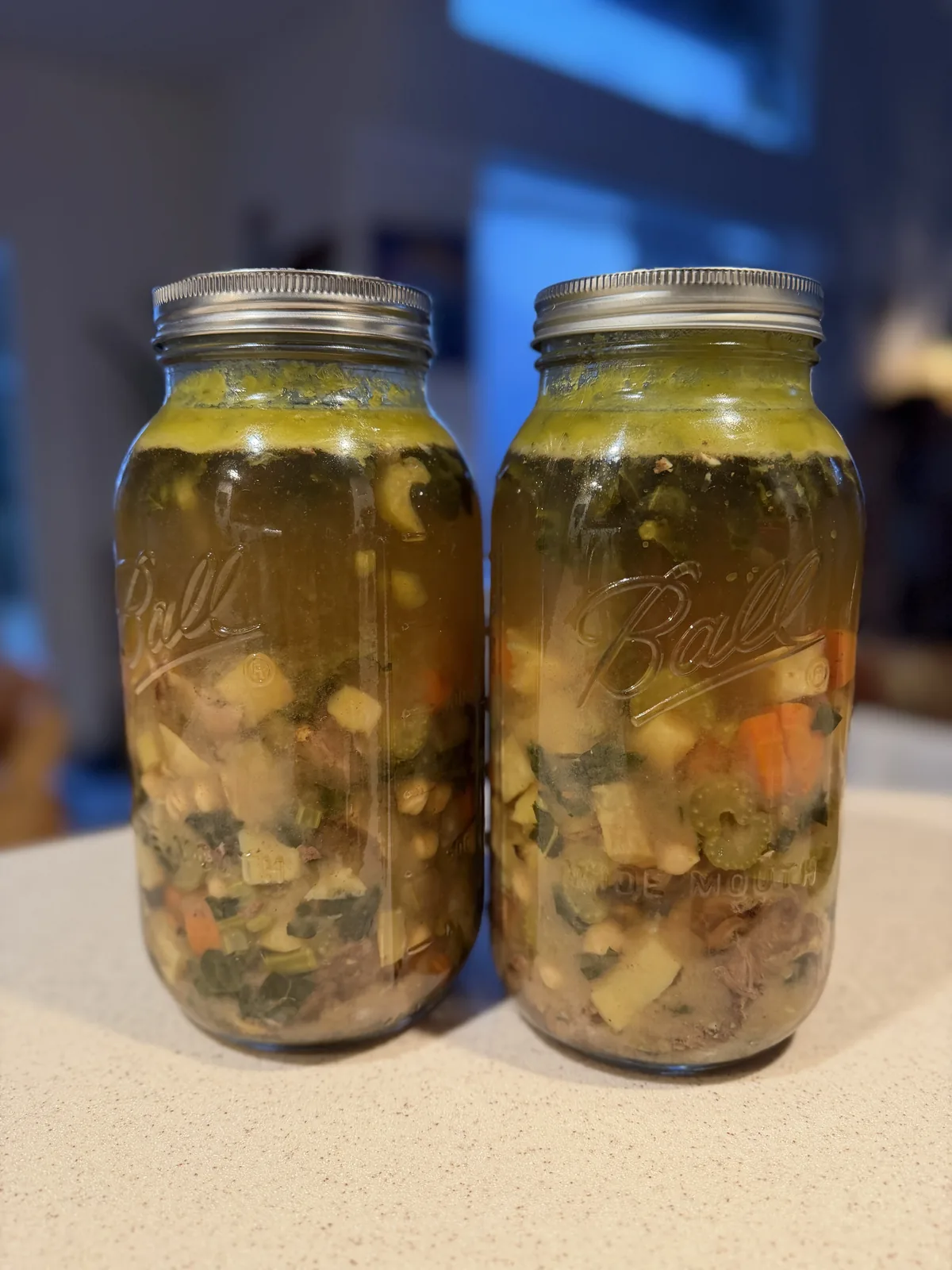
The base of this recipe came from one of my clients, Mariah — she shared her beef stew with me years ago. What turned it into our regular rotation was a different client entirely: one who actually paid me to teach him how to cook it for himself because his body needed deeply nourishing, high-calorie food. This stew became one of the recipes I built for him.
That’s when I started making it regularly for My Man too. The version below is what we’ve evolved together over the years — broiled first for deep caramelization, then pressure-cooked and simmered overnight until the flavors are extraordinary. These days it’s our cold-weather staple, and the dish we send home with friends when they have a new baby in the house.
This is not a fast recipe. Total time from start to finish is about ten hours, most of it hands-off (the overnight simmer does the heavy lifting while you sleep). We start it on a Saturday afternoon, let it simmer overnight, and have it ready for Sunday dinner — then eat it for two or three nights running and freeze the rest. It is everything you want a beef stew to be — rich, fall-apart tender, deeply savory, gut-friendly — and it carries no compromises in the ingredient list. No flour thickener, no mystery seasoning packets, no industrial broth (we use water by default, or My Man’s homemade bone broth when we have it).
Water or bone broth — both work beautifully
Our everyday version of this stew is built with plain filtered water as the cooking liquid. After broiling the meat and vegetables, pressure-cooking the meat, and simmering everything for 8 hours, the flavor that the broiled ingredients release into the water is more than enough. The stew comes out with body, depth, and a rich savory backbone that doesn’t depend on a fancy stock.
When we have My Man’s homemade beef bone broth on hand (he makes big batches we freeze in quart jars), we use that instead. The bone broth adds glycine, gelatin, minerals, and an even deeper savory base. It’s the upgrade version when we want to go all the way.
Both work. Pick what’s in your fridge — neither will let you down.
Why broiling first matters
Most beef stew recipes have you sear the meat in a skillet before the long braise. We do it differently. Both the vegetables and the meat get broiled in the oven first — vegetables for an hour with all the spices on the sheet pan, meat for about 30 minutes on its own.
What broiling does that searing can’t: the high heat caramelizes the vegetables’ natural sugars across their entire surface area at once, AND it toasts the spices into the vegetables so the flavor goes deep. You get golden onions, golden carrots, deeply browned potatoes — every piece carrying the cumin and adobo and herbs.
Cast-iron is a solid alternative for the meat. Sometimes we sear the meat in a hot cast-iron skillet on the stovetop instead of broiling — both work, the cast-iron version develops a slightly different crust. Most days we go with the oven broil because it’s hands-off while the vegetables are in there too.
It’s a small extra step that takes time but no babysitting. While the vegetables are broiling, you can prep the meat, do dishes, or set the table.
How to think about the vegetables
Our standard combination is onions, carrots, parsnips, potatoes, celery, and a whole head of garlic — the parsnips add a sweet earthiness that lifts the stew. From there, the dish welcomes additions that hold their shape through the long cook:
- Add turnips or rutabaga alongside the parsnips for more root-vegetable depth
- Throw in mushrooms (cremini or shiitake) for umami
- Add fennel bulb if you want an anise undertone
Skip anything that gets mushy under long heat — no sweet potatoes, no zucchini, no soft squash. Those break down in the 8-hour simmer and turn the stew into a slurry. Stick to firm root vegetables and aromatics.
And stick to the broil-first principle: anything going into the stew should first get caramelized in the oven. Raw vegetables added at the end change the texture and dilute the flavor.
The spices — cumin-forward, no red, all on the broil
The seasoning is what makes this stew our stew. All the spices go onto the vegetables before they go in the oven — not stirred in at the end. The broil toasts the spices into the vegetables for a much deeper flavor than dumping them into the pot would give you. Only salt gets added later (to taste, after the simmer).
The headlining spice is cumin — heavy, generous, about 2 tablespoons sprinkled across the sheet pan. Cumin’s warmth and smokiness do most of the flavor work.
A few supporting players, all sprinkled on the vegetables before broiling:
- Adobo seasoning — about 1 tablespoon. Salty, umami, a little tangy. Simply Organic adobo is clean; check labels on any brand for no MSG or junk.
- A tiny bit of fresh green herb — thyme, rosemary, or basil. Just a sprig or a small pinch. These float to the top of the simmer; a little goes a long way.
- Baharat (optional, very sparingly) — a Middle Eastern spice blend that opens up the flavor in a way you can’t quite put your finger on. About 1 teaspoon does it. If you don’t have Baharat on hand, the stew is still excellent without it.
10 bay leaves go in the simmer pot (not the broil — bay leaves need liquid to release their oils). Remove before serving.
One thing we don’t put in: red spices. No paprika, no cayenne, no bell pepper, nothing red. We keep this stew warm and earthy, not bright and red.
The overnight simmer is what makes it extraordinary
This stew has three cooking stages — broil, pressure cook (meat only), then overnight simmer (with vegetables added) — and the overnight is where the magic actually happens. After the pressure cook, the meat is tender; after the long simmer, it falls apart at the touch of a fork and the flavors meld so completely you can’t pull any single one out.
If you’ve never done an overnight simmer, the math is simple: start it before bed on the lowest possible burner setting, walk away, and find it transformed in the morning. We use a heavy stockpot with a tight-fitting lid (a slow cooker on the lowest setting works equally well — and is the safer choice if you’re not comfortable leaving the stove on overnight).
The broil + pressure-cook stages compress what would otherwise be a 2-day project into about 2 hours of active cooking. The overnight simmer is the unhurried last step that earns the recipe its character.
Ways to eat it
A few of the ways this stew shows up in our kitchen:
- In a wide bowl with a generous dollop of Strauss organic sour cream on top — this is how we serve it almost every time. The cool tang of grass-fed sour cream against the rich warm stew is the move. (Good Culture or another high-quality grass-fed brand also works.)
- With a slice of warm flourless tahini bread for dipping
- Over a scoop of rice or quinoa when we want more carb body
- With a spoonful of Ayurvedic pesto stirred in at the table — adds an herbaceous lift that contrasts the rich stew beautifully
- As leftover lunch the next day — somehow it’s even better the second day
- As the base for a “best-overs” upgrade — toss leftover stew over roasted greens or into a baked sweet potato
Best-overs
The stew keeps in the fridge for up to 5 days in a sealed container, and freezes beautifully for up to 3 months. Cool completely before refrigerating, and freeze in single-serving or family-portion containers so you can thaw exactly what you need.
To reheat: stovetop is best (gentle simmer on low for 10–15 minutes). The microwave works in a pinch but the meat texture is better when reheated slowly. Frozen stew can be dropped straight into a pot with a splash of broth or water and reheated from frozen on medium-low.
Recipe
Bone Broth Beef Stew — Broiled First
Prep: 30 min · Cook: about 9½ hr (broil + pressure cook meat + 8-hr simmer) · Total: about 10 hr · Yield: 8–10 servings
Ingredients
For the meat
- 2½ pounds beef chuck roast, cut into 2-inch cubes
- 2 tablespoons olive oil
- 1 teaspoon sea salt
- ½ teaspoon freshly ground black pepper
For the vegetables (and all the spices — they all go on the sheet pan)
- 2 medium onions, quartered
- 4–5 large carrots, cut into 2-inch chunks
- 2 large parsnips, peeled and cut into 2-inch chunks
- 1½ pounds yellow or red potatoes, cubed (skin on)
- 4 celery stalks, cut into 2-inch pieces
- 1 whole head of garlic, cloves smashed (skin on for roasting)
- About 5 tablespoons olive oil (be generous — don’t be shy)
- 2 tablespoons ground cumin (the headlining spice)
- 1 tablespoon adobo seasoning (Simply Organic adobo is clean — check labels)
- A tiny bit of fresh thyme, rosemary, or basil — just a sprig or a small pinch (it floats to the top, so a little goes a long way)
- 1 teaspoon Baharat (optional — a Middle Eastern spice blend that opens up the flavor in a way you can’t quite put your finger on)
- 1 teaspoon sea salt
- ½ teaspoon freshly ground black pepper
For the stew (added at the combine step)
- Water (what we use) — or My Man’s homemade beef bone broth as the upgrade. 4–6 cups total across the pressure-cook + simmer stages
- 10 bay leaves
- Additional sea salt to taste at the end (go easy at first — adobo is salty)
For serving (optional but recommended)
- A generous dollop of Strauss organic sour cream (or another high-quality grass-fed organic brand) on each bowl
NO red spices — no paprika, no cayenne, no bell pepper. Keep this stew warm and earthy, not bright and red.
Instructions
- Heat the oven to low broil (around 400°F if your oven uses temperature for broil; otherwise the standard low broil setting).
- Prep the vegetables AND season them with all the spices on the sheet pan. Quarter the onions, cut the carrots, parsnips, and celery into 2-inch chunks, cube the potatoes (skin on), and smash the garlic cloves (skin on). Spread on a large sheet pan. Drizzle with about 5 tablespoons of olive oil (generous). Sprinkle with 2 tablespoons of ground cumin, 1 tablespoon of adobo, a tiny bit of fresh thyme/rosemary/basil (a sprig or small pinch), 1 teaspoon of Baharat if using, salt, and pepper. Toss to coat everything.
- Broil the vegetables on low for about 1 hour. Turn them at least once partway through so they brown evenly on all sides. They should be deeply golden and tender when done.
- Meanwhile, prep the meat. Cut the chuck roast into 2-inch cubes (your butcher can do this if you ask). Pat dry, drizzle with olive oil, season with salt and pepper. Broil on low on a separate sheet pan for 30 minutes (time it to finish around the same time as the vegetables) until golden-brown caramelization. Alternative: sear the meat in a hot cast-iron skillet on the stovetop instead — both work. We do oven-broil most of the time, cast-iron occasionally.
- Pressure-cook the meat ONLY. Transfer the broiled meat to a pressure cooker (Instant Pot, electric, or stovetop). Add enough water (or bone broth) to cover the meat — about 2 cups. Pressure-cook on high for 30 minutes, then allow natural release for 10 minutes. The vegetables do NOT go in the pressure cooker.
- Combine. Add the broiled spiced vegetables to the pressure-cooked meat in a heavy stockpot. Add 10 bay leaves. Pour in additional water (or bone broth) to nearly cover everything.
- Overnight simmer. Bring to a gentle simmer, then drop to the lowest possible setting and let it simmer about 8 hours. The meat will fall apart and the flavors will deepen profoundly.
- Remove the bay leaves. Taste and adjust salt before serving — the long cook concentrates the flavor, and you may want very little additional salt.
- Serve hot in wide bowls with a generous dollop of Strauss organic sour cream on top. Even better the second day.
A note on the overnight simmer: if you’re not comfortable leaving the stove on overnight, the alternative is a slow cooker on the lowest setting for the same 8 hours — or transfer the pot to the fridge and finish the simmer in the morning. The overnight step is what takes this stew from “good” to “extraordinary,” so don’t skip it if you can avoid it.
A final note
This is the stew we make on cold weekends, after long hikes, and in the days after someone in the house has been sick. It’s nourishment in its most direct form — clean ingredients, slow technique, deep flavor. Broiled vegetables and meat, a single pressure cook to start the meat tenderizing, and an overnight simmer that does the rest.
It’s also a recipe that asks you to trust your senses. Your potato might be bigger than mine, your stove might run a little hotter, your cut of meat might want a few more minutes. Use your eyes, your nose, your taste. This stew is forgiving. Make it once, make it your own, and put it on rotation when the cold months ask for it.
Until next time, have a beautiful day.
— Chandra Zas